
How Often Should You Replace Your Car Tyres in Australia?
How often should you replace your car tyres? It's a question many Australian motorists ask, particularly when their tyres still appear to have plenty of tread remaining. Unlike an oil change or scheduled vehicle service, tyre replacement doesn't follow one fixed interval. Some tyres wear out after relatively modest mileage, while others remain serviceable for considerably longer. Driving habits, road conditions, tyre quality, maintenance and age all influence when replacement becomes necessary.
Even a tyre that looks relatively new can develop damage or deterioration that makes it unsuitable for continued use. For drivers in Campsie and surrounding Sydney suburbs, regular tyre inspections are an important part of keeping a vehicle roadworthy.
At Mathews Tyres in Campsie, we help motorists assess tyre condition, select suitable replacements and arrange professional tyre fitting and balancing. This guide explains how long car tyres typically last, the legal tread depth requirements in NSW, how to identify ageing tyres and the warning signs that indicate replacement may be necessary.
How Long Do Car Tyres Usually Last?
There is no universal distance or number of years that determines how long every car tyre will last. A tyre's lifespan depends on several factors, including its construction, the vehicle it is fitted to, driving conditions and how well it is maintained.
Two motorists driving identical vehicles can experience very different tyre wear. For example, a vehicle frequently driven in stop-start traffic may experience different tyre wear patterns from one predominantly used for longer motorway journeys.
Frequent braking, acceleration, cornering and heavy vehicle loads can all influence tread wear. The type of tyre also matters. Some performance tyres use compounds designed to prioritise grip and handling, while certain touring tyres are developed with longer tread life in mind.
Neither characteristic guarantees a particular lifespan. Tyre pressure, wheel alignment and suspension condition also influence how evenly the tread wears. A tyre may require replacement earlier than expected if it develops abnormal wear, internal damage or significant deterioration.
Rather than relying solely on kilometres travelled, motorists should consider three important factors:
- Remaining tread depth.
- Overall tyre condition.
- Tyre age.
A professional inspection can help determine whether the tyre remains suitable for continued use.
What Is the Minimum Legal Tyre Tread Depth in NSW?
In NSW, the minimum required tread depth for applicable road tyres is 1.5 millimetres in the principal grooves across the required tread area. This requirement is published by the NSW Government as part of its vehicle roadworthiness guidance.
The tread is the patterned rubber surface that contacts the road. Its grooves help manage water between the tyre and road surface, particularly during wet weather. As the tread wears down, the tyre's ability to disperse water can become less effective.
This can increase the risk of losing traction on wet roads.
Why You Shouldn't Wait Until Your Tyres Reach 1.5 mm
Although 1.5 mm is the NSW minimum, it should not be treated as an ideal replacement target. Tyre performance can deteriorate before the legal limit is reached. As tread depth decreases, the tyre generally has less capacity to channel water away from the contact area.
This can affect wet-weather braking and increase the risk of aquaplaning under certain conditions. Bridgestone Australia advises that motorists may wish to consider replacement when tread depth falls below approximately 3 mm, particularly where wet-weather performance is a concern.
This is preventative guidance rather than a separate NSW legal requirement. The appropriate replacement decision should consider the tyre's condition, design and intended use.
How to Check Your Tyre Tread Depth
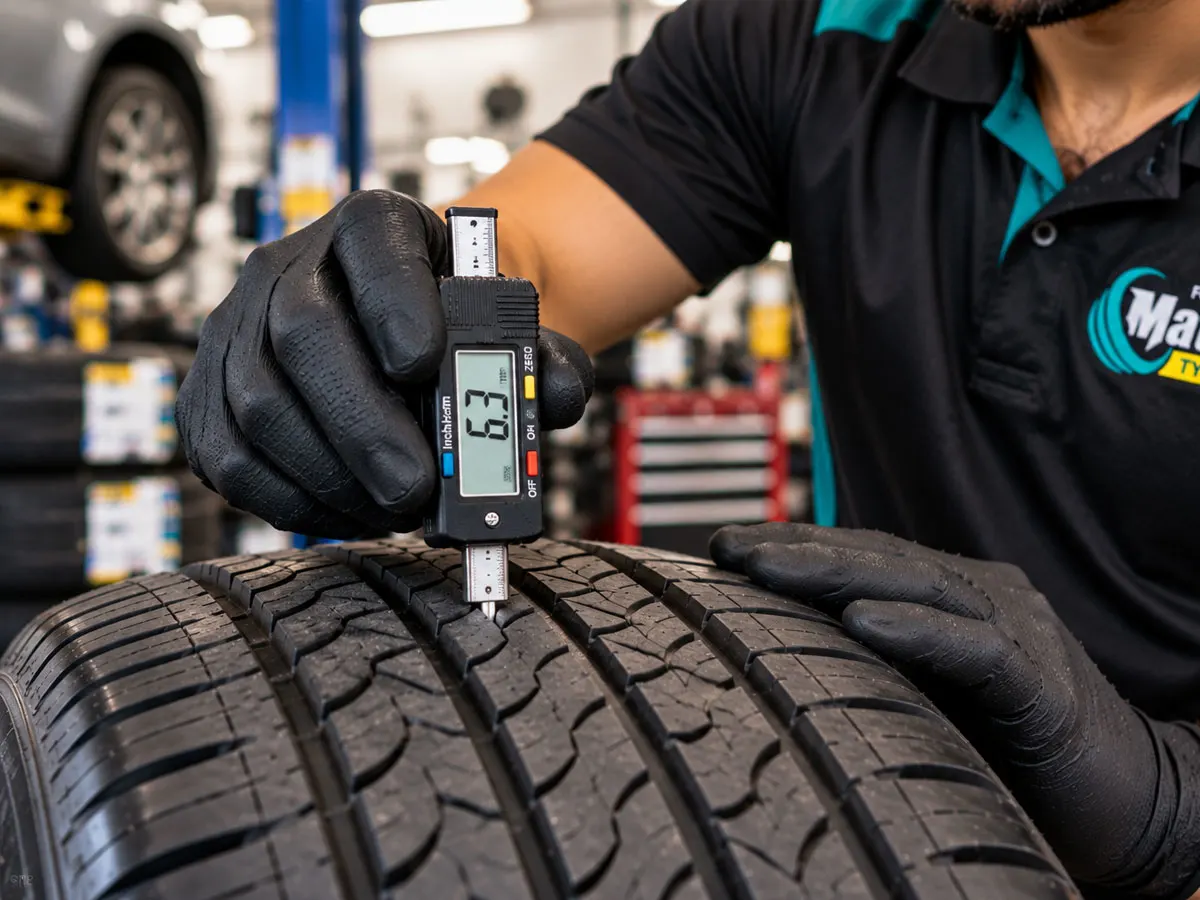
The most reliable way to measure remaining tread depth is with a tyre tread depth gauge. These tools measure the depth of the main tread grooves in millimetres. Measurements should be taken at several points around the tyre and across the relevant tread area.
Checking only one location may miss uneven wear. If one shoulder is substantially more worn than the centre, the tyre may have an alignment, inflation or suspension-related problem. Tyres also contain built-in tread wear indicators. These are small raised bars positioned within the main tread grooves.
When the surrounding tread wears down to the level of these indicators, the tyre has reached the manufacturer's wear-indicator threshold and requires replacement. Many passenger tyre wear indicators are approximately 1.6 mm high. Because this differs slightly from the NSW minimum of 1.5 mm, motorists should not assume the two measurements are identical.
If your tyres are approaching their wear indicators, arrange a professional inspection rather than waiting for further deterioration.
How Many Years Do Car Tyres Last?
Tyres deteriorate with age, even when they are not used frequently. Rubber compounds and other tyre materials are affected by environmental exposure, temperature changes, storage conditions and general use. Over time, these factors can influence the tyre's flexibility and structural condition.
A vehicle driven only occasionally may have tyres with substantial tread remaining but still require replacement because of ageing or damage.
The Five-Year Inspection Recommendation
Michelin recommends that tyres which have been in use for five years or longer receive a thorough professional inspection at least once annually. This does not mean every tyre must automatically be replaced after five years. It means age becomes an increasingly important factor when assessing continued suitability.
The inspection should consider visible deterioration, damage, tread condition and other signs that the tyre may no longer be safe.
The Ten-Year Replacement Recommendation
Michelin also recommends replacing tyres ten years after their manufacturing date as a precaution, even when the tread appears serviceable. This recommendation includes spare tyres. It is important to distinguish manufacturer recommendations from legal requirements.
The ten-year recommendation is not a universal NSW legal replacement deadline. Other tyre and vehicle manufacturers may specify different requirements, so their instructions should also be considered. If a tyre develops significant cracking, bulges or other damage before reaching these milestones, replacement may be necessary much earlier.
How to Check the Age of Your Car Tyres
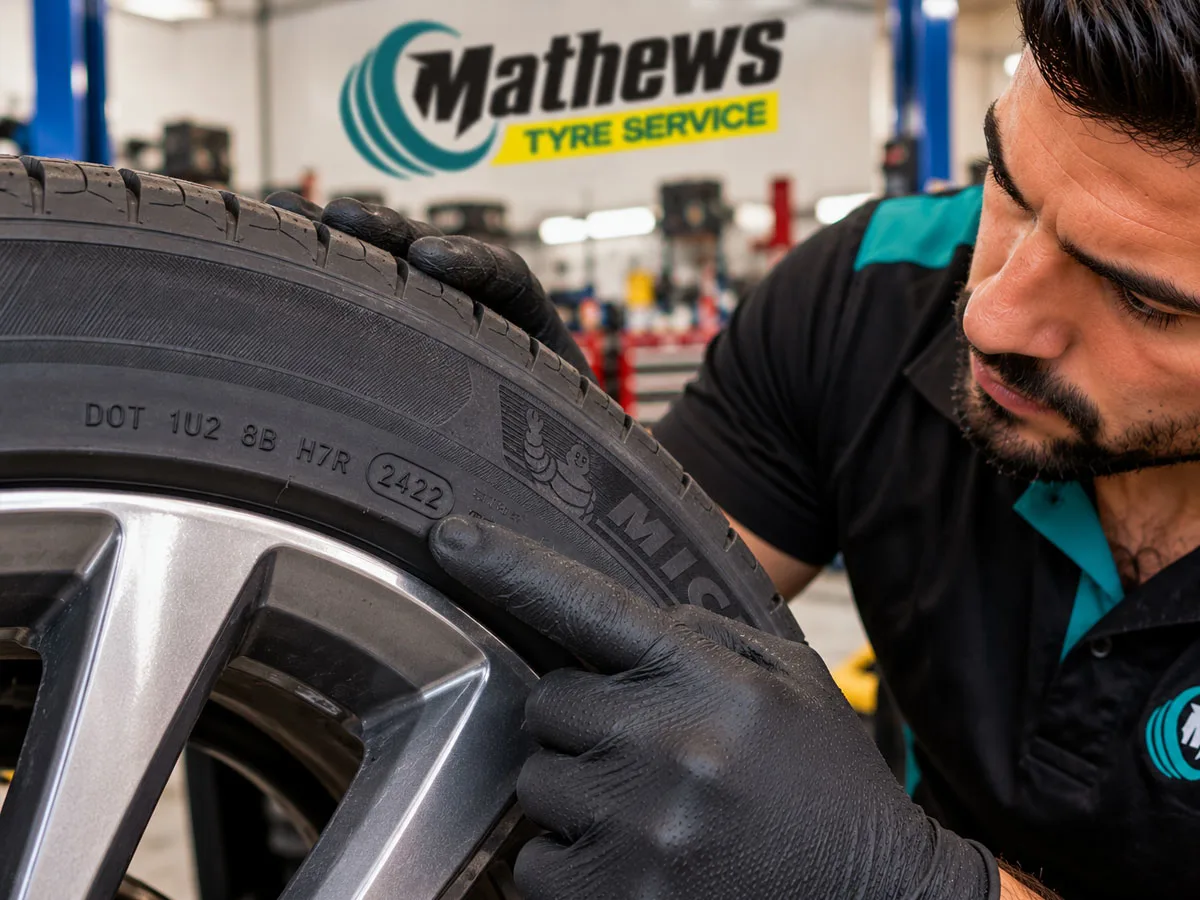
You can identify the manufacturing date of many tyres by examining the date code on the sidewall. The date is normally represented by four digits. The first two digits indicate the week of manufacture. The final two digits indicate the year. For example:
2422
This indicates that the tyre was manufactured during the 24th week of 2022. A code ending in 2022 does not tell you when the tyre was fitted to the vehicle. It identifies when the tyre was manufactured. The full tyre identification marking may appear on only one side of the tyre, so the date code may be positioned on the inward-facing side.
If you cannot locate the manufacturing date, a tyre technician can help identify it.
Why Tyre Age Matters
Tyres are made from multiple materials, including rubber compounds, reinforcing fabrics and steel components. Their condition can change over time due to exposure to heat, sunlight, oxygen and physical stresses. Age-related deterioration may appear as cracking, hardening or other visible damage.
However, not every form of deterioration can be identified through a quick visual inspection. This is why tyre age should be considered alongside tread depth and overall condition. If you have recently purchased a used vehicle, checking the tyre manufacturing dates is a sensible precaution.
The tyres may be considerably older than the vehicle's current ownership period suggests.
7 Signs Your Car Tyres Need Replacing
Tyres do not always wear evenly or deteriorate gradually. Some problems develop over time, while others result from sudden impacts or road hazards. The following warning signs indicate that your tyres should be inspected and may need replacing.
1. Your Tyres Have Insufficient Tread
Low tread depth is one of the clearest signs that replacement is approaching. As tyres wear, the grooves become shallower and the tread wear indicators become more visible. Once the tread reaches the manufacturer's wear indicators, replacement is required.
Even before this point, reduced tread depth may affect wet-weather grip. If you frequently drive in heavy rain or on wet roads, it is particularly important to monitor tread condition.
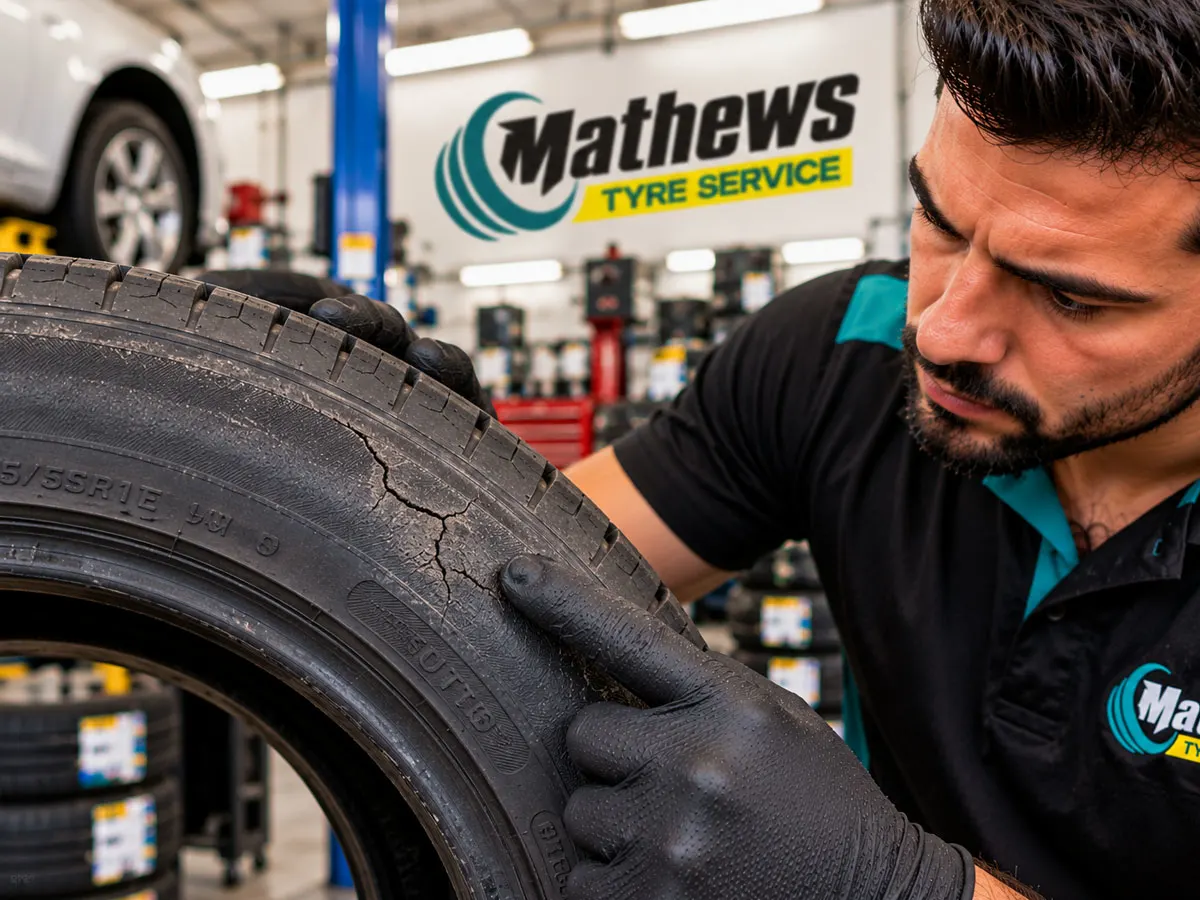
2. You Notice Cracks in the Tyre Sidewall
Cracking can develop as tyre rubber ages or deteriorates. Small surface marks do not always indicate immediate failure, but visible cracks should not be ignored. Deep cracks, widespread deterioration or cracking accompanied by other damage require professional assessment.
A tyre technician can determine whether the tyre remains suitable for use. Do not assume that sufficient tread depth makes an ageing or damaged tyre safe.
3. Your Tyres Have Bulges or Blisters
A bulge in the tyre sidewall can indicate internal structural damage. This may occur after a significant impact with a pothole, kerb or other obstacle. The internal reinforcing materials may become damaged, allowing the sidewall to deform. A bulging tyre should not continue to be driven on.
Arrange safe recovery or professional assistance, as structural damage can increase the risk of sudden tyre failure.
4. Your Tyres Are Wearing Unevenly
Uneven tyre wear can indicate problems beyond normal tread deterioration. Common patterns include:
- Excessive wear along the inner shoulder.
- Excessive wear along the outer shoulder.
- Greater wear in the centre of the tread.
- Wear concentrated along both shoulders.
- Irregular or feathered tread blocks.
Incorrect inflation, wheel alignment problems and worn suspension components can contribute to these patterns. If the tyre remains serviceable, addressing the underlying problem may help prevent further abnormal wear. However, if the tread has already become excessively worn, replacement may still be necessary.
For a more detailed explanation of alignment-related warning signs, read our guide to 7 signs your car needs a wheel alignment.
5. Your Car Develops Unusual Vibrations
Vibrations through the steering wheel, seat or vehicle body can have several causes. These include wheel imbalance, damaged tyres, bent wheels and mechanical faults. A tyre with internal damage may create vibration even when its tread appears relatively normal.
If a new vibration develops, particularly after hitting a pothole or kerb, arrange an inspection. Do not assume that wheel balancing alone will resolve the issue.
6. Your Tyre Frequently Loses Air
A tyre that repeatedly loses pressure may have a puncture, damaged valve, wheel sealing problem or other defect. Some punctures can be repaired safely, depending on their location and extent. However, sidewall damage and tyres that have been driven while severely underinflated may require replacement.
A tyre can suffer internal damage even when the outside does not appear severely affected. If your tyre continues losing air, have it inspected rather than repeatedly reinflating it without investigating the cause.
7. Your Tyres Are Too Old or Have Deteriorated
A tyre can appear to have reasonable tread depth while still being unsuitable for continued use. Age, heat exposure, storage conditions and physical damage can all influence tyre condition. Older tyres should be assessed in accordance with manufacturer guidance.
Significant cracking, deformation or other evidence of deterioration may require replacement regardless of the remaining tread. If you are unsure how old your tyres are, check the manufacturing date and arrange an inspection.
What Causes Car Tyres to Wear Out Faster?
Several factors influence tyre lifespan. Understanding these can help motorists identify avoidable wear and maintain their tyres more effectively.
Incorrect Tyre Pressure
Underinflated tyres can experience excessive flexing and heat build-up. They may also develop increased wear along the tread shoulders. Overinflation can contribute to concentrated wear in the centre of the tread and affect ride comfort. Always use the pressure recommended by your vehicle manufacturer rather than the maximum pressure printed on the tyre sidewall.
Poor Wheel Alignment
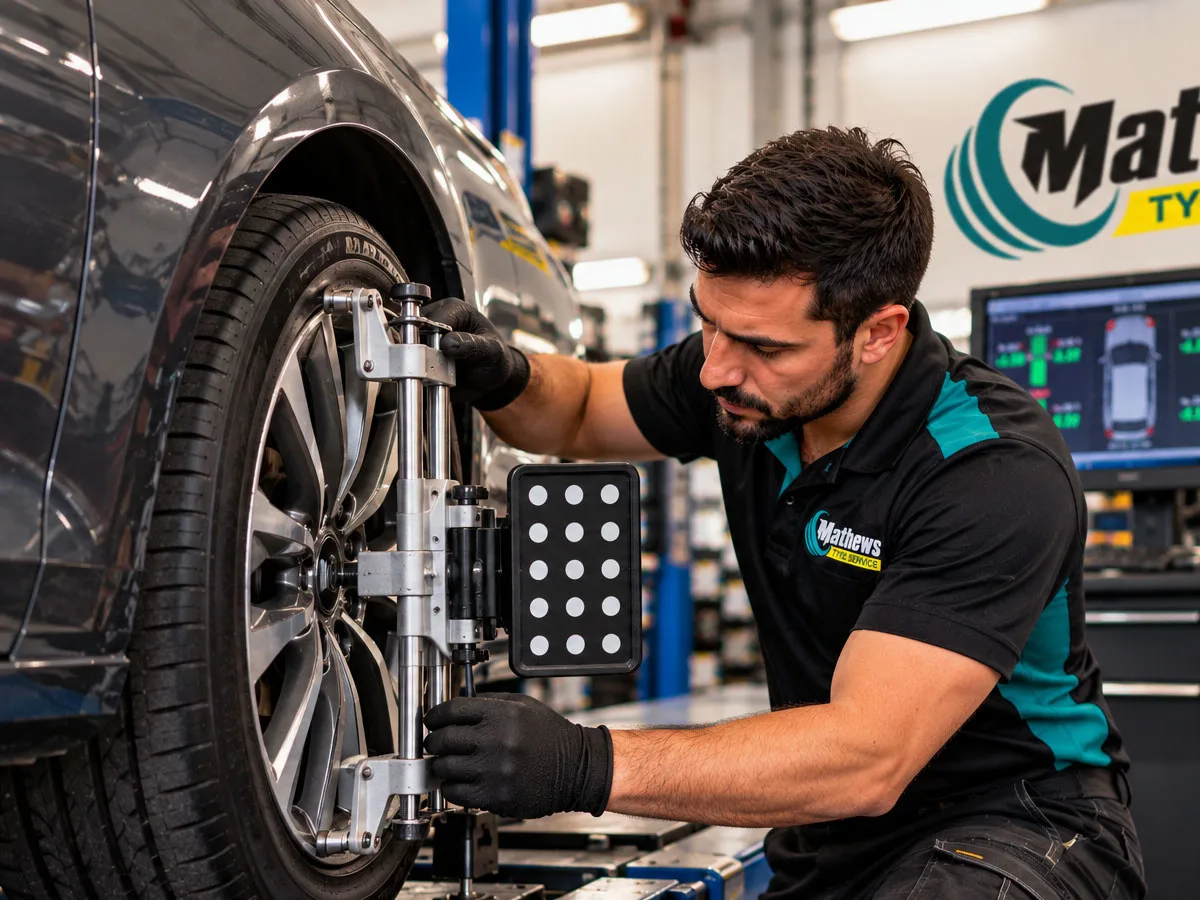
Incorrect alignment can cause tyres to scrub against the road surface. This may produce premature wear along particular sections of the tread. If your vehicle pulls to one side or your steering wheel sits off-centre, an alignment inspection may be appropriate.
Worn Suspension Components
Suspension components help maintain tyre contact with the road. Worn shock absorbers, bushes or steering components can contribute to abnormal tyre wear and handling problems. Correcting the underlying mechanical issue may be necessary before fitting replacement tyres.
Driving Habits
Frequent hard acceleration, heavy braking and aggressive cornering can increase tyre wear. Smoother driving habits may help reduce unnecessary tread deterioration.
Road Conditions
Potholes, damaged road surfaces and kerb impacts can damage tyres and wheels. Repeated impacts may also affect alignment and suspension components.
Vehicle Loading
Carrying excessive loads can increase stress on tyres. Always observe the vehicle manufacturer's loading recommendations and ensure tyre pressures are appropriate for the load.
How to Make Your Car Tyres Last Longer
Regular maintenance can help tyres wear more evenly and reduce the likelihood of avoidable damage.
Check Tyre Pressure Regularly
Check tyre pressures when the tyres are cold, using the manufacturer's recommended settings. These are commonly found on a vehicle placard inside the driver's door opening or in the owner's manual. Remember to check the spare tyre where applicable.
Inspect Your Tyres for Damage
Look for:
- Cuts and cracks.
- Bulges.
- Embedded objects.
- Uneven tread wear.
- Unusual changes in tyre shape.
- Low tread depth.
If you notice damage, arrange a professional inspection.
Rotate Tyres When Appropriate
Tyre rotation can help distribute wear between suitable wheel positions. Bridgestone Australia discusses rotation intervals of approximately 5,000–8,000 kilometres as general guidance. However, the correct interval and rotation pattern depend on the vehicle, tyre design and manufacturer instructions.
Some vehicles have staggered tyre sizes or directional tyres that limit how the tyres can be rotated.
Maintain Wheel Alignment and Balancing
Correct alignment helps tyres wear as intended. Wheel balancing helps minimise vibration caused by uneven mass distribution within the wheel and tyre assembly. Neither service replaces the need for regular tyre inspections.
Address Mechanical Problems Early
Worn steering and suspension components can affect handling and tyre wear. If your vehicle develops unusual noises, vibrations or steering behaviour, investigate the cause rather than waiting until the next scheduled service.
Should You Replace Two Tyres or All Four?
Not every vehicle requires four new tyres whenever one tyre becomes worn. The appropriate replacement decision depends on the condition of the remaining tyres, the vehicle's drivetrain and the manufacturer's requirements. For many vehicles, replacing tyres in axle pairs may be appropriate when the other tyres remain suitable.
However, the tyres fitted to the same axle must meet applicable requirements, and differences in tyre construction, size or condition can affect vehicle behaviour.
What About All-Wheel-Drive Vehicles?
Some all-wheel-drive vehicles are particularly sensitive to differences in tyre rolling circumference. Significant differences in tread depth or tyre dimensions may place additional stress on drivetrain components. The manufacturer's specifications should guide replacement decisions.
In some circumstances, replacing all four tyres may be necessary.
Where Should the Newer Tyres Be Fitted?
Tyre manufacturers commonly recommend fitting the tyres with better wet-weather grip to the rear axle when replacing only two tyres, subject to vehicle-specific instructions. This helps support rear-axle stability in wet conditions. However, tyre sizes, directional requirements and manufacturer recommendations must be considered.
A professional tyre technician can assess the vehicle and recommend an appropriate arrangement.
Can a Punctured Tyre Be Repaired Instead of Replaced?
A puncture does not automatically mean the tyre must be replaced. Some punctures within the central tread area can be repaired safely when they meet the applicable repair criteria. The repair decision depends on:
- The location of the puncture.
- The size and angle of the injury.
- Remaining tread depth.
- The tyre's internal condition.
- Whether the tyre has been driven while underinflated.
- Previous repairs and manufacturer restrictions.
Sidewall and shoulder damage generally cannot be repaired safely using standard passenger tyre repair procedures. A proper assessment requires the tyre to be inspected, including its internal condition where necessary. Temporary external string plugs should not be treated as equivalent to a professional permanent repair.
Mathews Tyres provides puncture inspection and repair services at its Campsie workshop. Drivers from surrounding areas can also access tyre and puncture repair services near Canterbury. If a tyre is flat or severely underinflated, avoid driving on it. Arrange safe assistance or transport to a workshop.
Why Tyre Condition Matters in Sydney's Wet Weather
Sydney motorists experience a mixture of dry conditions, heavy rainfall and wet road surfaces. During rainfall, tyres must manage water between the tread and road surface. The grooves in the tyre help channel water away from the contact area.
As tread depth decreases, the tyre's ability to manage standing water can become less effective. This may increase the risk of aquaplaning. Aquaplaning occurs when a layer of water separates the tyre from the road surface, reducing traction and steering control.
Tyre condition is only one factor. Vehicle speed, water depth, road surface, tyre pressure and tyre design also influence wet-weather performance. Maintaining suitable tread depth and reducing speed in heavy rain are important precautions. If your tyres are approaching their wear indicators or show irregular wear, have them inspected before continuing to rely on them in demanding conditions.
Professional Tyre Replacement in Campsie
If your tyres are approaching their wear indicators, showing signs of damage or becoming unsuitable because of age, professional advice can help you decide when replacement is necessary.
Mathews Tyres & Mechanical supplies and fits new tyres at its workshop at 43 Ninth Ave, Campsie NSW 2194. The workshop provides tyre replacement, fitting, balancing, wheel alignment, puncture repairs and general mechanical services. When choosing replacement tyres, it is important to consider more than the price.
The correct tyre must meet the vehicle manufacturer's requirements for size, load capacity and speed rating. Driving habits and typical road conditions should also influence the selection. For example, motorists who primarily drive around suburban Sydney may have different priorities from drivers who regularly travel longer distances on motorways.
Mathews Tyres assists drivers from Campsie and surrounding suburbs, including Belmore, Lakemba, Canterbury, Belfield, Earlwood and Croydon Park. Motorists looking for new tyres and fitting near Croydon Park can visit the Campsie workshop for suitable replacement options.
Drivers from Belfield can also explore the workshop's tyre fitting and mechanical services near Belfield. A professional inspection can help determine whether your tyres need replacing immediately or whether they remain suitable for continued use.
Frequently Asked Questions
How often should you replace car tyres in Australia?
There is no fixed replacement interval that applies to every vehicle. Tyre lifespan depends on tread wear, age, driving conditions, maintenance and damage. Tyres must meet the applicable legal tread requirements and remain roadworthy. Manufacturers also provide age-related inspection and replacement recommendations. Regular inspections are the best way to determine when replacement is necessary.
What is the minimum legal tyre tread depth in NSW?
The NSW Government specifies a minimum tread depth of 1.5 mm in the applicable principal grooves. Tyres must also be in suitable condition, without defects such as dangerous cuts, bulges or excessive irregular wear. Tyre manufacturers may recommend replacing tyres before they reach the legal minimum, particularly to maintain wet-weather performance.
Should I replace tyres after five years?
Not automatically. Michelin recommends that tyres which have been in use for five years or longer receive a professional inspection at least annually. The need for replacement depends on the tyre's condition and manufacturer guidance. Significant cracking, structural damage or excessive wear can require replacement much earlier.
Do car tyres expire after ten years?
Tyres do not have one universal legal expiry date in NSW. However, Michelin recommends replacing tyres ten years after their manufacturing date as a precaution, even if they appear to have usable tread remaining. This recommendation also applies to spare tyres. Always consider the specific tyre and vehicle manufacturer's guidance.
How do I know if my tyres are too old?
Check the manufacturing date code on the tyre sidewall. The final four digits of the relevant tyre identification marking indicate the week and year of manufacture. For example, 2422 means the tyre was manufactured in the 24th week of 2022. If you cannot locate the code, a tyre technician can help.
Can I replace only two tyres instead of four?
Often, yes, but it depends on the vehicle and the condition of the remaining tyres. Some all-wheel-drive systems require closely matched tyre rolling circumferences. The correct tyre size, specifications and manufacturer recommendations must be followed. A professional inspection can determine whether replacing two tyres is appropriate or whether additional replacements are necessary.
Should I replace tyres before they reach 1.5 mm?
It may be sensible to replace tyres before reaching the NSW legal minimum, particularly if wet-weather performance is a concern. As tread depth decreases, the tyre's ability to disperse water can become less effective. Bridgestone Australia suggests considering replacement around 3 mm in some circumstances. The decision should account for tyre condition and intended use.
Can a tyre with a nail in it be repaired?
Some punctures within the central tread area can be repaired when they meet applicable safety criteria. The size and location of the damage, internal tyre condition and whether the tyre has been driven while flat all matter. Sidewall damage generally requires replacement. A professional inspection is necessary to determine whether a repair is suitable.
Need New Car Tyres in Campsie?
If you're unsure whether your tyres need replacing, arranging an inspection is a practical first step. Mathews Tyres & Mechanical provides tyre inspections, replacement, fitting and balancing services for motorists throughout Campsie and surrounding suburbs.
Whether your tyres are worn, damaged or approaching the end of their recommended service life, the workshop can help you assess suitable options. Visit Mathews Tyres at 43 Ninth Ave, Campsie NSW 2194, or contact Mathews Tyres to discuss your vehicle's tyre requirements.
Phone: (02) 9789 5777