
7 Signs Your Car Needs a Wheel Alignment
Does your car pull slightly to one side when you're driving? Have you noticed your steering wheel sitting at an unusual angle, or are your tyres wearing faster on one edge than the other? These are common warning signs that your vehicle may need a wheel alignment.
Wheel alignment plays an important role in how your car handles, how evenly your tyres wear and how confidently your vehicle responds to steering. When the wheels are no longer positioned within the manufacturer's recommended specifications, the effects can develop gradually, which makes them easy to overlook during everyday driving.
At Mathews Tyres in Campsie, we help local motorists identify tyre wear and steering problems, with wheel alignment, wheel balancing and mechanical services available at our Ninth Avenue workshop.
Understanding the warning signs can help you recognise potential problems before they lead to unnecessary tyre replacement or more expensive repairs.
Here are seven signs you need a wheel alignment, what causes these problems and when to arrange a professional inspection.
What Is Wheel Alignment?
Wheel alignment is the process of measuring and, where possible, adjusting the angles of your vehicle's wheels and suspension components to match the manufacturer's specifications.
Despite the name, wheel alignment does not involve physically moving the tyres into position on their rims. Instead, technicians measure the geometry of the suspension and steering system to make sure the wheels are positioned correctly in relation to the vehicle and the road surface.
Three important alignment measurements are toe, camber and caster.
Toe describes whether the wheels point slightly towards or away from each other when viewed from above. Incorrect toe settings can cause tyres to scrub against the road surface rather than roll in their intended direction.
Camber refers to the inward or outward tilt of a wheel when viewed from the front. Excessive positive or negative camber can contribute to uneven wear along the outer or inner edges of a tyre.
Caster describes the angle of the steering axis when viewed from the side. It influences steering stability, directional control and how the steering returns towards its centre position after turning.
The correct measurements vary between vehicle makes and models. A setting that is suitable for one car may be inappropriate for another.
Professional wheel alignment and balancing services address different aspects of vehicle performance. Alignment helps maintain correct wheel positioning, while balancing helps the wheels rotate smoothly without excessive vibration.
7 Signs Your Car Needs a Wheel Alignment
1. Your Car Pulls to One Side
One of the most recognisable wheel alignment symptoms is a vehicle that consistently pulls towards the left or right. You might notice that your car needs constant steering correction to hold its intended direction, even on a relatively straight road.
Incorrect alignment can contribute to this behaviour because the wheels may not be pointing in the correct direction relative to one another.
However, pulling does not automatically mean your vehicle needs an alignment adjustment. Other possible causes include:
- Unequal tyre pressures.
- Differences in tyre construction or wear.
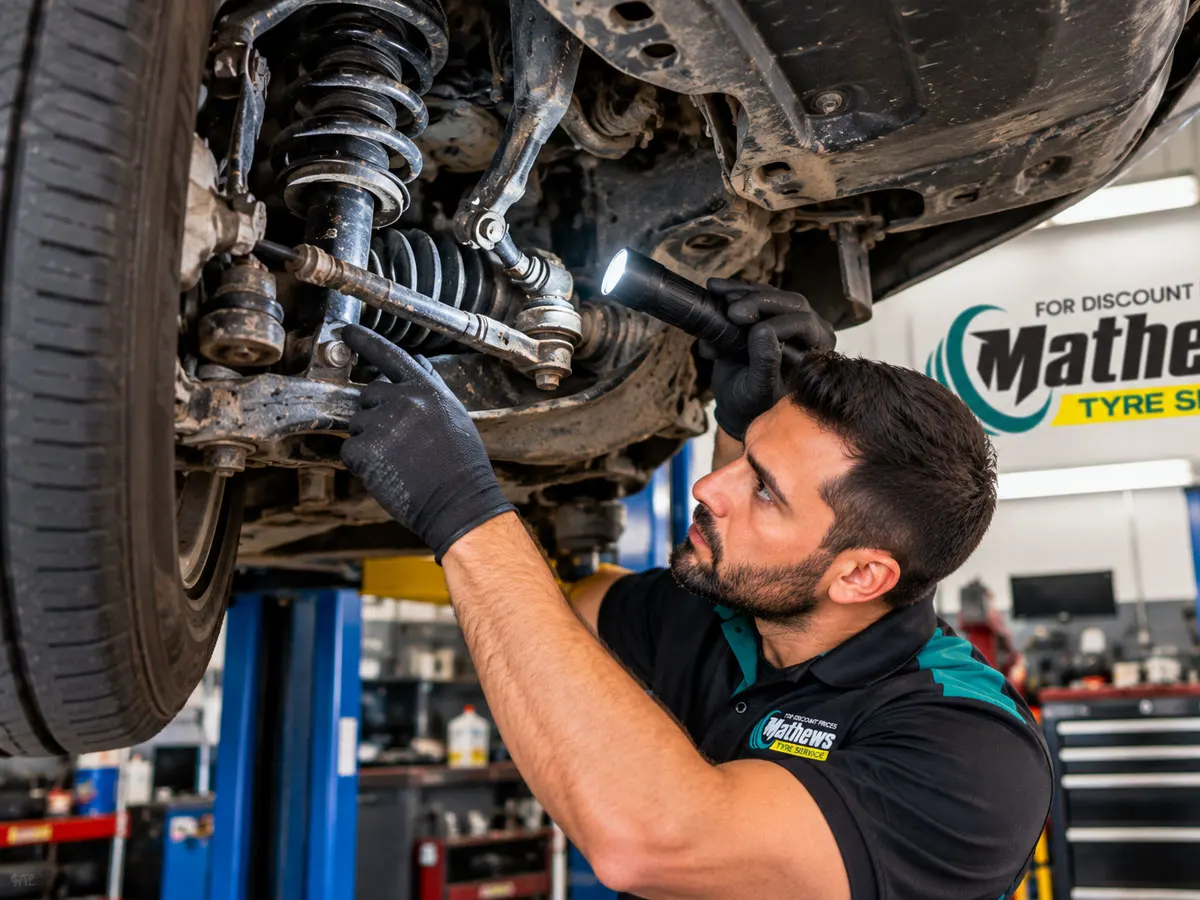
- Worn steering or suspension components.
- Brake components that are not releasing correctly.
- Road camber or uneven road surfaces.
Many Australian roads have a slight slope to help rainwater drain away. This can create a mild tendency for vehicles to move towards the lower side of the road.
A persistent or pronounced pull, particularly when it comes with uneven tyre wear or unusual steering behaviour, should be investigated.
If your vehicle suddenly pulls strongly to one side or becomes difficult to control, arrange a prompt professional inspection rather than assuming alignment is the only issue.
2. Your Steering Wheel Isn't Straight
When you're travelling in a straight line, your steering wheel should normally sit close to its intended centred position. If you regularly need to hold the wheel slightly clockwise or anticlockwise to keep your vehicle travelling straight, incorrect alignment may be contributing to the problem.
This can happen when the relationship between the steering wheel position and the direction of the road wheels is incorrect.
An off-centre steering wheel can also appear following suspension repairs, steering component replacement or previous alignment work that did not correctly centre the steering system. The problem may develop gradually, particularly if suspension components have worn over time.
Although an off-centre steering wheel does not necessarily mean your tyres are already damaged, it is a good reason to arrange an inspection. A technician can measure the alignment angles and check whether worn or damaged components are affecting the vehicle's steering geometry.
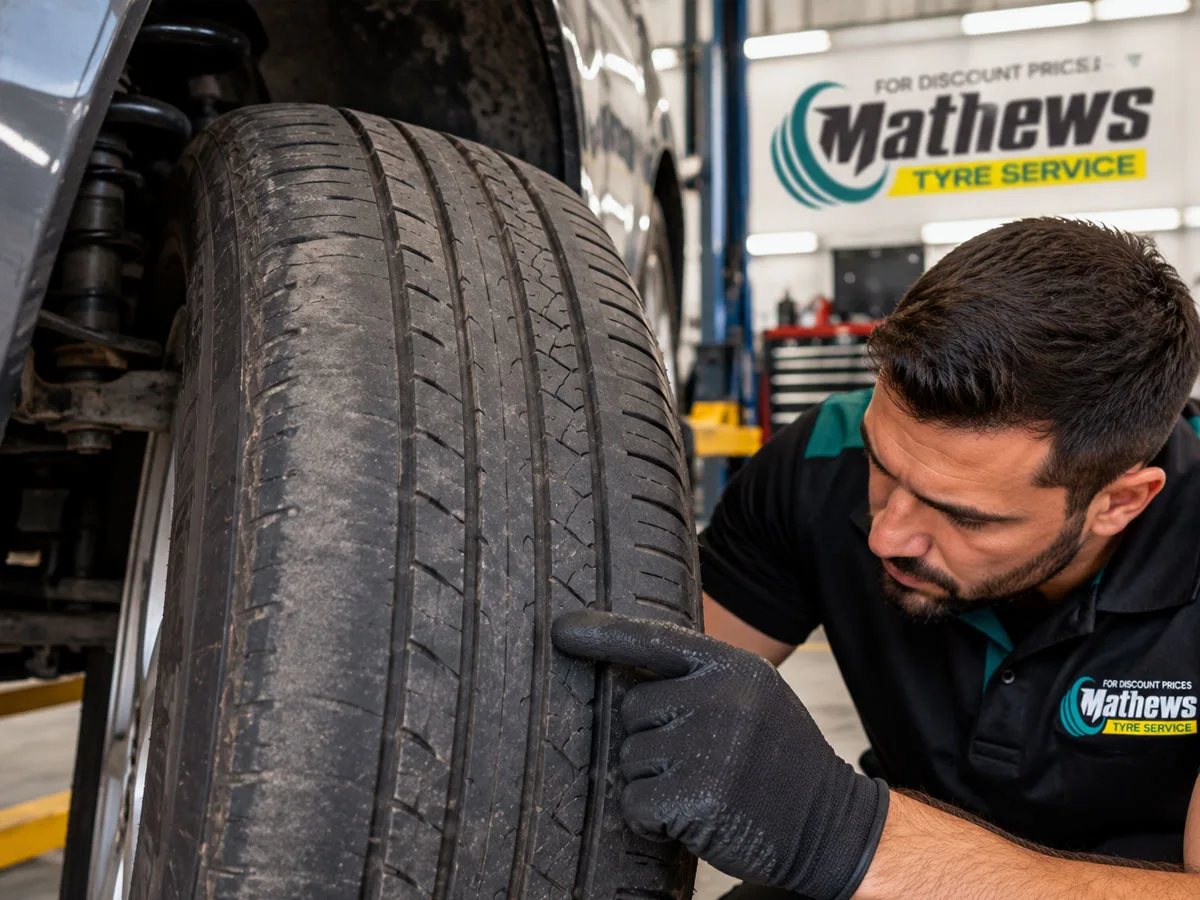
3. Your Tyres Are Wearing Unevenly
Uneven tyre wear is one of the strongest reasons to have your wheel alignment checked.
Your tyres should generally wear in a reasonably consistent pattern when they are correctly inflated, maintained and used under normal driving conditions. When the alignment angles are incorrect, particular sections of the tread may experience greater friction against the road surface.
Common tyre wear patterns include:
Inner-edge wear: The inside shoulder of the tyre wears more quickly than the remaining tread. Excessive negative camber or incorrect toe settings may contribute.
Outer-edge wear: The outside shoulder wears faster. Alignment geometry, driving conditions and inflation can all influence this pattern.
Feathered tread wear: Individual tread blocks develop a smooth edge on one side and a sharper edge on the other. This can indicate incorrect toe settings.
Wear across both shoulders: This can be associated with underinflation, although driving conditions and other mechanical factors should also be considered.
Not every irregular wear pattern is caused by alignment. Incorrect tyre pressure, worn shock absorbers, damaged suspension components and unsuitable tyre maintenance can produce similar results.
In NSW, tyres must meet minimum roadworthiness requirements, including a tread depth of at least 1.5 mm in the applicable principal grooves. However, waiting until your tyres approach the legal minimum is not a good maintenance strategy.
If you notice significant differences between the inside and outside edges, arrange an inspection before further wear develops.
4. Your Steering Feels Different
Changes in steering response can sometimes indicate a wheel alignment or suspension problem. Your car might feel less predictable when entering corners, need more steering correction than usual or respond differently to small steering inputs. Some drivers describe the sensation as their vehicle feeling unsettled or less stable than it used to.
Wheel alignment influences how the tyres contact the road and how the vehicle responds to steering movements. However, steering changes can also result from:
- Incorrect tyre inflation.
- Worn steering joints.
- Damaged suspension bushes.
- Tyre damage.
- Problems with steering assistance.
- Other mechanical faults.
It is important not to assume that an alignment adjustment will resolve every handling complaint.
If your steering feels unusually heavy, loose, inconsistent or difficult to control, a mechanical inspection should take priority. A technician can assess the tyres, steering system and suspension before determining whether alignment adjustments are appropriate.
5. You've Recently Hit a Pothole or Kerb
Sydney motorists regularly encounter potholes, damaged road surfaces, driveway edges and raised kerbs. A significant impact with any of these obstacles can affect wheel alignment or damage steering and suspension components.
The impact may alter suspension geometry, particularly if a component bends, shifts or becomes damaged. You may notice an immediate change in steering behaviour, although some problems become apparent only after additional driving.
Warning signs following an impact include:
- A steering wheel that no longer sits straight.
- A vehicle that begins pulling to one side.
- New vibrations or unusual noises.
- Visible tyre or wheel damage.
- Changes in handling or steering response.
Drivers travelling between Campsie and Canterbury may encounter road damage and uneven surfaces during everyday commuting. Motorists seeking tyre and mechanical services in Canterbury can visit Mathews Tyres at its nearby Campsie workshop.
If you strike a substantial pothole or kerb, inspect your tyres and wheels for visible damage when it is safe to do so. Bulges, cuts, significant wheel damage or sudden changes in handling require professional attention.
An alignment adjustment alone will not repair a bent suspension component or damaged wheel.
6. Your Tyres Are Wearing Faster Than Expected
Car tyres naturally wear as they accumulate kilometres, but excessive or unusually rapid wear may indicate an underlying problem.
When wheels are incorrectly aligned, the tyres can experience additional scrubbing as they travel along the road. Instead of rolling in their intended direction, the tread may be subjected to forces that accelerate wear. This can shorten the useful life of otherwise serviceable tyres.
For example, a vehicle with incorrect toe settings may develop substantial tread wear even though the driver has not noticed any obvious steering problem.
Rapid wear can also result from:
- Incorrect tyre pressures.
- Aggressive acceleration or braking.
- Frequent heavy loading.
- Worn suspension components.
- Driving conditions.
- Tyres that are unsuitable for the vehicle.
If you have recently replaced your tyres and notice that the tread is disappearing unevenly or unusually quickly, it is worth investigating the cause. Simply fitting another set of tyres without correcting an underlying alignment or mechanical issue may allow the same problem to return.
A professional tyre inspection can help identify whether alignment, inflation, suspension wear or another factor is responsible.
7. Your Vehicle Doesn't Track Straight
Vehicle tracking refers to how consistently a car follows its intended direction while travelling. A vehicle with correct alignment and sound steering components should respond predictably to normal steering inputs.
If your car feels as though it wanders within its lane, needs frequent small corrections or does not follow the direction you expect, its alignment may need checking. Unlike a consistent pull towards one side, wandering can feel like the vehicle is moving unpredictably in either direction.
Possible causes include incorrect alignment settings, worn steering components, suspension movement or tyre-related problems. The condition may become more noticeable at higher speeds, although it should not be tested deliberately on public roads.
If your vehicle feels unstable or needs excessive correction, avoid unnecessary driving until the problem has been assessed. An inspection can help determine whether the issue is caused by alignment geometry, mechanical wear or another fault.
What Causes Wheel Alignment Problems?
Wheel alignment can change for several reasons, from sudden impacts to the gradual deterioration of steering or suspension components.
Potholes and road damage
A substantial impact can damage suspension parts or affect the position of components that determine wheel alignment.
Kerb strikes
Hitting a kerb while parking or turning can place considerable force on the wheel, tyre and suspension.
Worn suspension bushes
Rubber suspension bushes help control movement between components. As they deteriorate, excessive movement may affect wheel positioning and handling.
Worn steering components
Tie rods, ball joints and related components influence steering accuracy. Excessive wear can make it difficult to maintain correct alignment.
Accident damage
Even relatively minor collisions can damage wheels, suspension components or mounting points.
Suspension modifications
Lowering a vehicle or changing suspension components can alter its geometry and may require an alignment check.
Importantly, alignment measurements should not be used as a substitute for inspecting worn or damaged components. If a steering or suspension part is defective, it may need repairing or replacing before accurate alignment adjustments can be completed.
How Often Should You Get a Wheel Alignment?
There is no single wheel alignment interval that applies to every vehicle. The appropriate inspection schedule depends on the manufacturer's recommendations, road conditions, vehicle use and whether warning signs are present.
An alignment check is particularly worthwhile when:
- Your car begins pulling to one side.
- Your steering wheel no longer sits straight.
- You notice unusual or uneven tyre wear.
- Your vehicle has experienced a significant pothole or kerb impact.
- Steering or suspension components have been replaced.
- You are fitting new tyres and there are signs of existing alignment problems.
Some drivers choose to have their alignment checked periodically as part of preventative vehicle maintenance. However, an inspection does not always mean adjustments are required. If the measurements remain within the manufacturer's specifications and the vehicle is operating correctly, unnecessary adjustments should be avoided.
The important thing is to investigate warning signs promptly rather than waiting until your tyres become badly worn.
Wheel Alignment vs Wheel Balancing: What's the Difference?
Wheel alignment and wheel balancing are frequently confused, but they address different problems.
Wheel alignment involves measuring and adjusting the angles of the wheels relative to the vehicle's suspension and steering geometry. Its purpose is to maintain correct wheel positioning, predictable handling and appropriate tyre contact with the road.
Wheel balancing involves correcting uneven weight distribution within a wheel and tyre assembly. Even a small imbalance can produce vibration when the wheel rotates at speed. A technician typically uses a balancing machine to identify the imbalance and determine where corrective weights are required.
The symptoms can provide useful clues. A vehicle that pulls to one side or develops unusual edge wear may have an alignment problem. A vehicle that develops vibration through the steering wheel, seat or floor at particular speeds may have a wheel balancing issue. However, vibration can also be caused by damaged tyres, bent wheels or mechanical faults.
A vehicle can have correctly aligned wheels that are out of balance, or correctly balanced wheels that are misaligned. Both services contribute to maintaining tyre performance, but neither replaces the other.
What Happens During a Professional Wheel Alignment?
A professional wheel alignment generally begins with an assessment of the vehicle's tyres, steering and suspension condition. The technician may inspect tyre pressures, tread wear and visible mechanical components before proceeding.
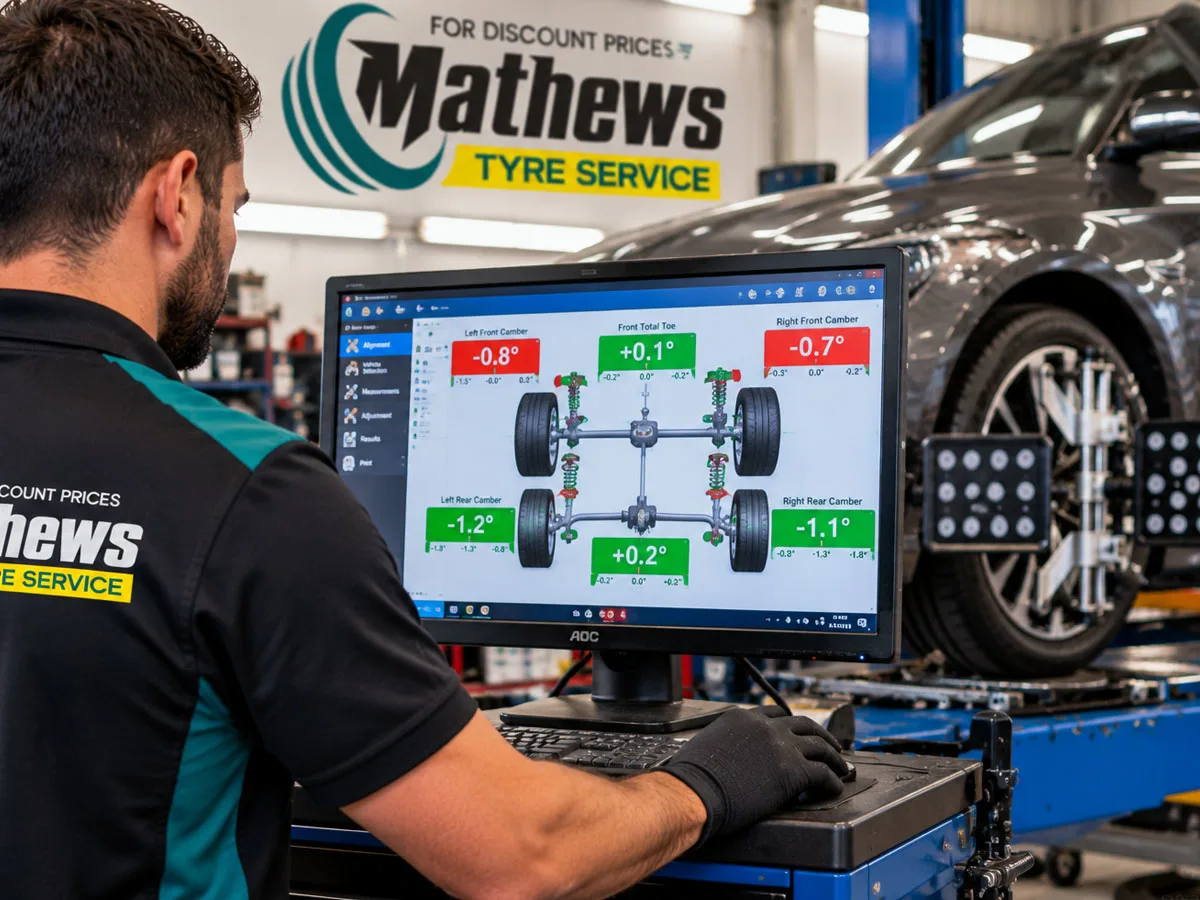
The vehicle is then positioned on suitable alignment equipment. Sensors or measuring targets are attached to the wheels, allowing the equipment to calculate the relevant alignment angles. The technician compares these measurements against the manufacturer's specifications.
Depending on the vehicle, adjustments may be available for toe, camber, caster or selected rear-wheel settings. Not every vehicle provides adjustment points for every alignment angle.
Where a measurement falls outside specification and cannot be adjusted normally, further investigation may be required. The technician may need to check for damaged, worn or incorrectly installed components.
Following the necessary adjustments, the measurements are checked again. The objective is to restore the relevant settings to the manufacturer's specifications and address the vehicle's reported symptoms where alignment is the cause.
If the vehicle has additional steering, suspension or tyre faults, those problems may require separate repairs.
Can Poor Wheel Alignment Damage Your Tyres?
Yes. Incorrect wheel alignment can contribute to premature and uneven tyre wear.
When the wheels are not positioned correctly, sections of the tyre tread may experience unnecessary friction against the road surface. Over time, this can reduce usable tread depth and shorten tyre life. The effect may be particularly noticeable when incorrect toe or camber settings cause concentrated wear along one edge.
Poor alignment can also affect handling, making the vehicle less predictable to drive.
However, an alignment adjustment cannot restore tread that has already worn away. If a tyre has become excessively worn or damaged, replacement may be necessary even after the underlying alignment problem is corrected.
Regular tyre inspections can help identify developing problems before they become severe. Check your tyres for uneven tread wear, cuts, bulges and visible damage, and maintain the pressures recommended for your vehicle. If you notice a problem, arranging an inspection early may help prevent further unnecessary wear.
Wheel Alignment Services in Campsie
If your vehicle is pulling to one side, your tyres are wearing unevenly or your steering no longer feels right, a professional inspection can help identify the cause.
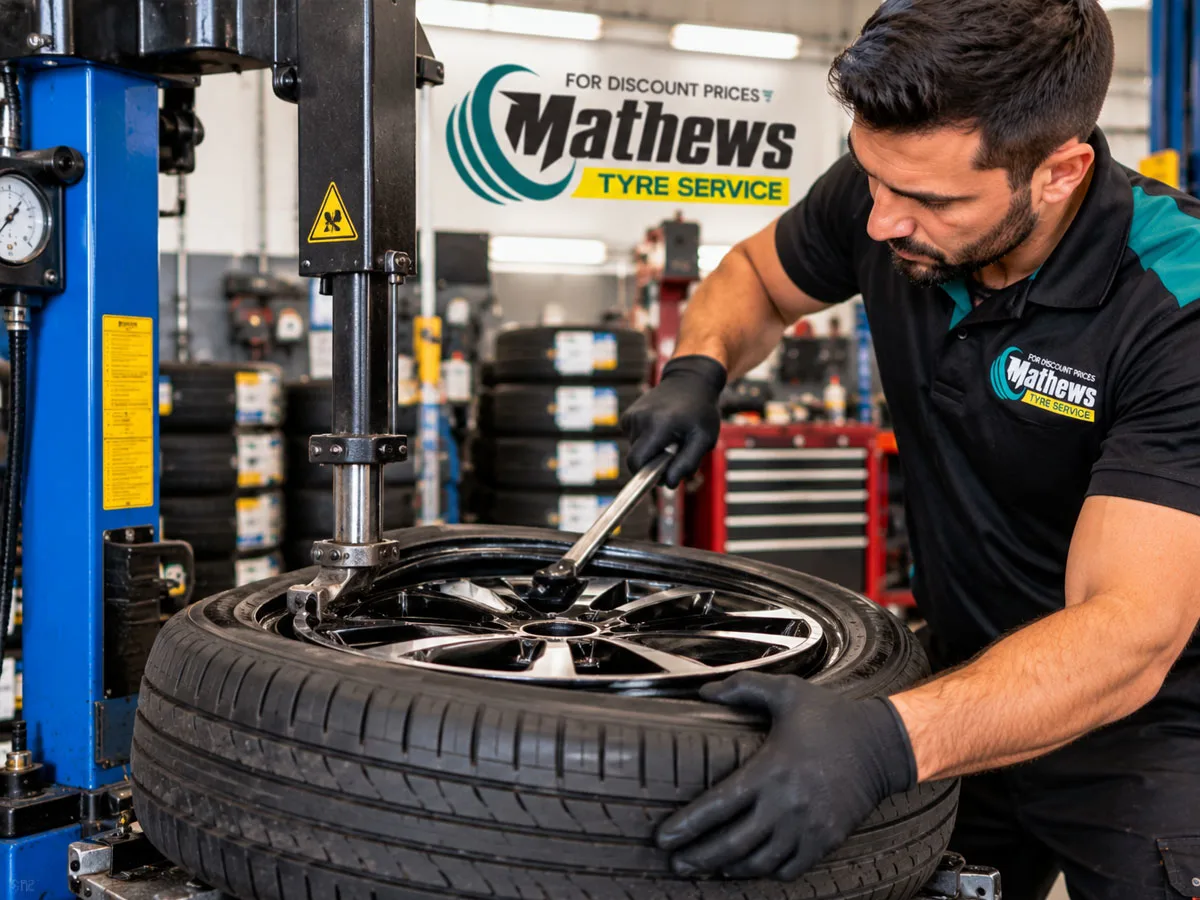
Mathews Tyres & Mechanical provides wheel alignment, wheel balancing, tyre fitting, puncture repairs and mechanical services from its workshop at 43 Ninth Ave, Campsie NSW 2194. The workshop assists motorists from Campsie and surrounding suburbs, including Canterbury, Belmore, Belfield and Earlwood.
Mathews Tyres also provides tyre services for Croydon Park motorists, with tyre replacement, wheel balancing, alignment and mechanical services available at the Campsie location.
Whether you have noticed unusual tyre wear, recently hit a pothole or are experiencing changes in vehicle handling, identifying the underlying problem is the first step towards an appropriate repair.
Frequently Asked Questions
How do I know if my car needs a wheel alignment?
Common signs include uneven tyre wear, a steering wheel that sits off-centre and a vehicle that consistently pulls to one side. You may also notice changes in steering response or handling. These symptoms can have several causes, so a professional inspection is the most reliable way to determine whether alignment adjustments are required.
Can bad wheel alignment cause steering wheel vibration?
Incorrect alignment can sometimes contribute to handling problems, but steering wheel vibration is more commonly associated with wheel imbalance, tyre damage or other mechanical issues. If vibration occurs at particular speeds, wheel balancing and tyre condition should be investigated. A technician can inspect the vehicle to identify the cause rather than assuming alignment is responsible.
Should I get a wheel alignment after buying new tyres?
Having the alignment checked when fitting new tyres can be worthwhile, particularly if the previous tyres showed uneven wear or the vehicle has steering problems. New tyres do not automatically require an alignment adjustment if the existing measurements are correct. An inspection can help determine whether adjustments are needed to protect the replacement tyres.
How long does a wheel alignment take?
The time required depends on the vehicle, the type of alignment and whether additional mechanical problems are identified. A straightforward adjustment may be completed relatively quickly, while worn suspension components or seized adjustment points can extend the work required. Contact the workshop for an estimate based on your particular vehicle.
Can hitting a pothole affect wheel alignment?
Yes. A significant pothole impact can damage wheels, tyres or suspension components and may alter alignment geometry. If your steering wheel becomes off-centre, the vehicle begins pulling or you notice unusual vibrations after an impact, arrange an inspection. Visible tyre bulges or severe handling changes require prompt attention.
Is wheel alignment the same as wheel balancing?
No. Wheel alignment concerns the angles and positioning of the wheels relative to the vehicle's suspension. Wheel balancing corrects uneven weight distribution in the rotating wheel and tyre assembly. Alignment problems often produce pulling or uneven edge wear, while imbalance commonly causes vibration at particular speeds. Both services address different aspects of vehicle performance.
Book a Wheel Alignment at Mathews Tyres
Uneven tyre wear, off-centre steering and changes in vehicle handling should not be ignored.
If your car is pulling to one side, your steering wheel is sitting at an unusual angle or your tyres are wearing unevenly, contact Mathews Tyres to arrange a professional inspection at our Campsie workshop. Our tyre and mechanical services can help identify alignment-related problems and determine whether additional repairs are required.
Mathews Tyres & Mechanical43 Ninth Ave, Campsie NSW 2194
Contact the workshop to discuss your vehicle's symptoms and arrange a suitable inspection time.