
What PSI Should Your Car Tyres Be? Australian Tyre Pressure Guide
You've pulled into a petrol station to put some air in your tyres. The compressor asks you to enter a pressure, but you're not entirely sure what number to use. Should it be 30 PSI? 32 PSI? Perhaps 36 PSI? It's a common question, and choosing the correct pressure matters more than many drivers realise.
The correct tyre pressure depends on your vehicle, not a universal PSI figure. While many passenger cars use pressures somewhere around 30–36 PSI, the appropriate setting for your car could be different. Some vehicles require different pressures for the front and rear tyres. Others specify higher pressures when carrying additional passengers, luggage or heavy loads.
Tyre pressure affects how your vehicle handles, brakes and responds to the road. Incorrect inflation can also contribute to premature tyre wear, increased fuel consumption and tyre damage. For drivers travelling around Campsie, Canterbury, Belmore and surrounding Sydney suburbs, checking tyre pressure regularly is a simple way to help maintain vehicle safety.
At Mathews Tyres in Campsie, we provide tyre fitting, puncture repairs, wheel balancing, wheel alignment and general mechanical services. This guide explains what PSI means, how to find your vehicle's recommended pressure, how to check your tyres correctly and what to do when a tyre keeps losing air.
What Does PSI Mean on Car Tyres?
PSI stands for pounds per square inch. It is a unit used to measure the pressure of the air inside your tyres. Although Australia generally uses the metric system, PSI remains common in the automotive industry. You may also see tyre pressure expressed in kilopascals (kPa) or bar.
All three units measure pressure. The following conversions can help when your vehicle handbook and petrol station compressor use different units.
| PSI | Approximate kPa |
|---|---|
| 28 PSI | 193 kPa |
| 30 PSI | 207 kPa |
| 32 PSI | 221 kPa |
| 34 PSI | 234 kPa |
| 35 PSI | 241 kPa |
| 36 PSI | 248 kPa |
| 38 PSI | 262 kPa |
| 40 PSI | 276 kPa |
These figures are conversions only. They are not recommended pressures for every vehicle. For example, if your vehicle manufacturer specifies 35 PSI, that is approximately 241 kPa. When using a petrol station compressor, check which unit is displayed before entering the pressure.
A reading of 240 kPa is very different from 240 PSI.
What PSI Should Your Car Tyres Be?
There is no single pressure suitable for every car. Bridgestone Australia's tyre pressure guidance explains that the recommended inflation pressure depends on the vehicle manufacturer's specifications. Many passenger vehicles have recommended pressures in the general range of 30–36 PSI.
However, this is only a broad reference. Your vehicle may require a higher or lower setting. The correct pressure is influenced by several factors:
- Vehicle weight.
- Tyre size and construction.
- Front and rear axle loads.
- Number of passengers.
- Luggage and other cargo.
- Towing requirements.
- Vehicle manufacturer's specifications.
Two cars fitted with tyres of the same size may still require different inflation pressures.
Is 32 PSI a Good Tyre Pressure?
It can be. For some vehicles, 32 PSI is an appropriate cold tyre pressure. For others, it may be too low or too high. You should only use 32 PSI when it matches the manufacturer's recommendation for your vehicle and operating conditions.
Is 35 PSI Too High?
Not necessarily. 35 PSI is a normal recommended pressure for some passenger vehicles. However, the same pressure may not be suitable for a different car. The number itself does not determine whether the tyre is correctly inflated. What matters is whether it matches the manufacturer's specifications.
Is 40 PSI Too High for Car Tyres?
40 PSI may be suitable for certain vehicles, tyres or loading conditions. It may also be excessive for a vehicle designed to operate at a lower pressure. Do not assume that a higher pressure is safer or better for fuel economy. Always check the vehicle's recommended settings.
Should Front and Rear Tyres Have the Same PSI?
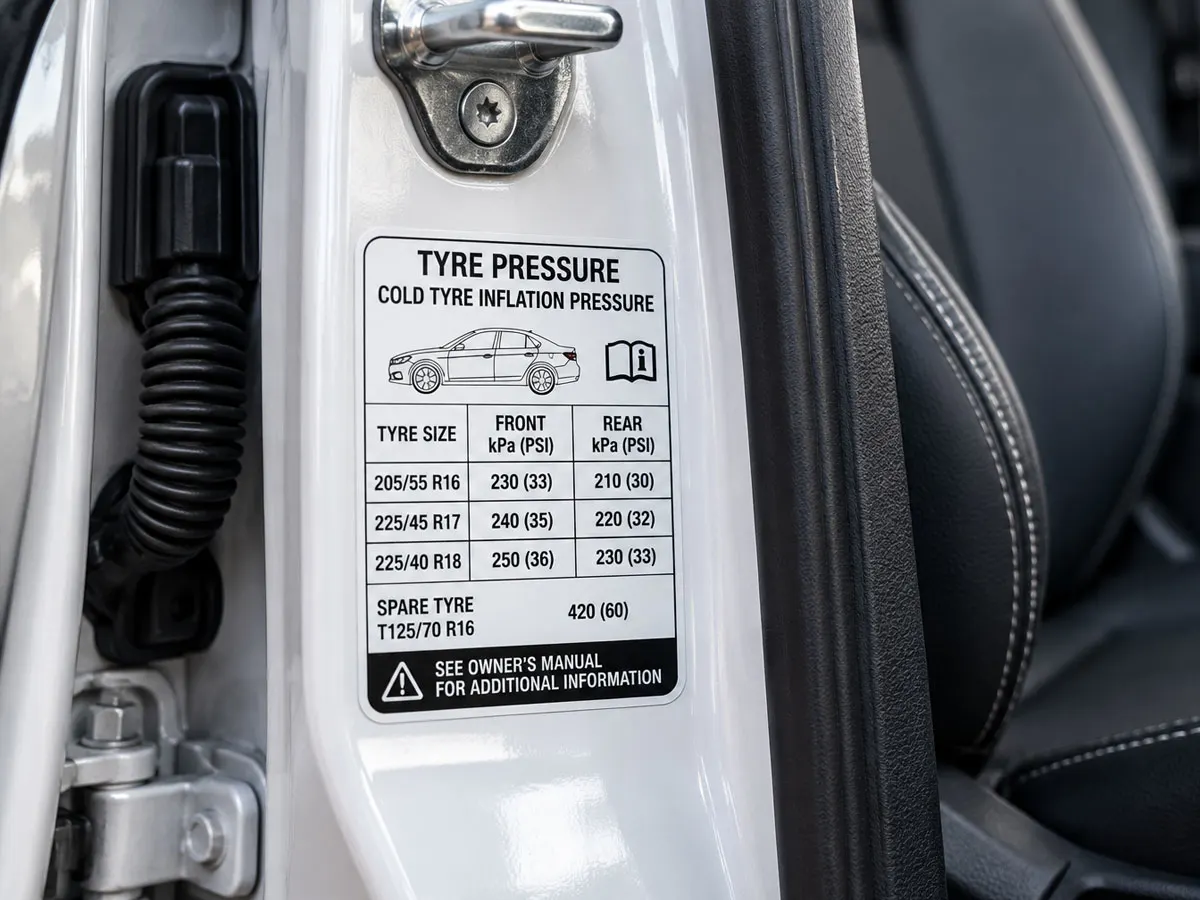
Not always. Some manufacturers recommend different pressures for the front and rear tyres. This can reflect differences in weight distribution and vehicle design. For example, a vehicle may require a higher pressure at one axle than the other.
Check the tyre placard before inflating all four tyres to the same pressure.
Where Can You Find the Correct Tyre Pressure?
The best place to find your vehicle's recommended tyre pressure is the manufacturer's tyre information placard. This label is commonly located inside the driver's door opening. Depending on the vehicle, it may also be found:
- On the driver's door pillar.
- Inside the fuel filler flap.
- Inside the glove box.
- In the owner's manual.
The placard normally identifies the recommended pressures for the original approved tyre sizes. It may display different pressures for normal driving and heavier loads. Some vehicles also specify different settings for particular operating conditions.
Make sure you're reading the figures that apply to the tyres currently fitted to your vehicle.
What If Your Car Has Different Wheels or Tyres?
If your vehicle has aftermarket wheels or a tyre size different from the original specification, the correct pressure may require additional consideration. The tyre's load rating, construction and suitability for the vehicle all matter. A tyre technician can help assess the specifications and determine whether the original placard guidance remains applicable.
Should You Use the Maximum PSI Printed on the Tyre?
No, not as your default setting. The tyre sidewall may display a maximum inflation pressure associated with its rated load. That figure is not necessarily the recommended pressure for everyday driving. Using the maximum sidewall pressure without checking the vehicle's requirements can result in overinflation.
Follow the vehicle manufacturer's recommendations unless an appropriate alternative has been established for your specific tyre and vehicle combination.
How to Check Your Tyre Pressure at a Petrol Station
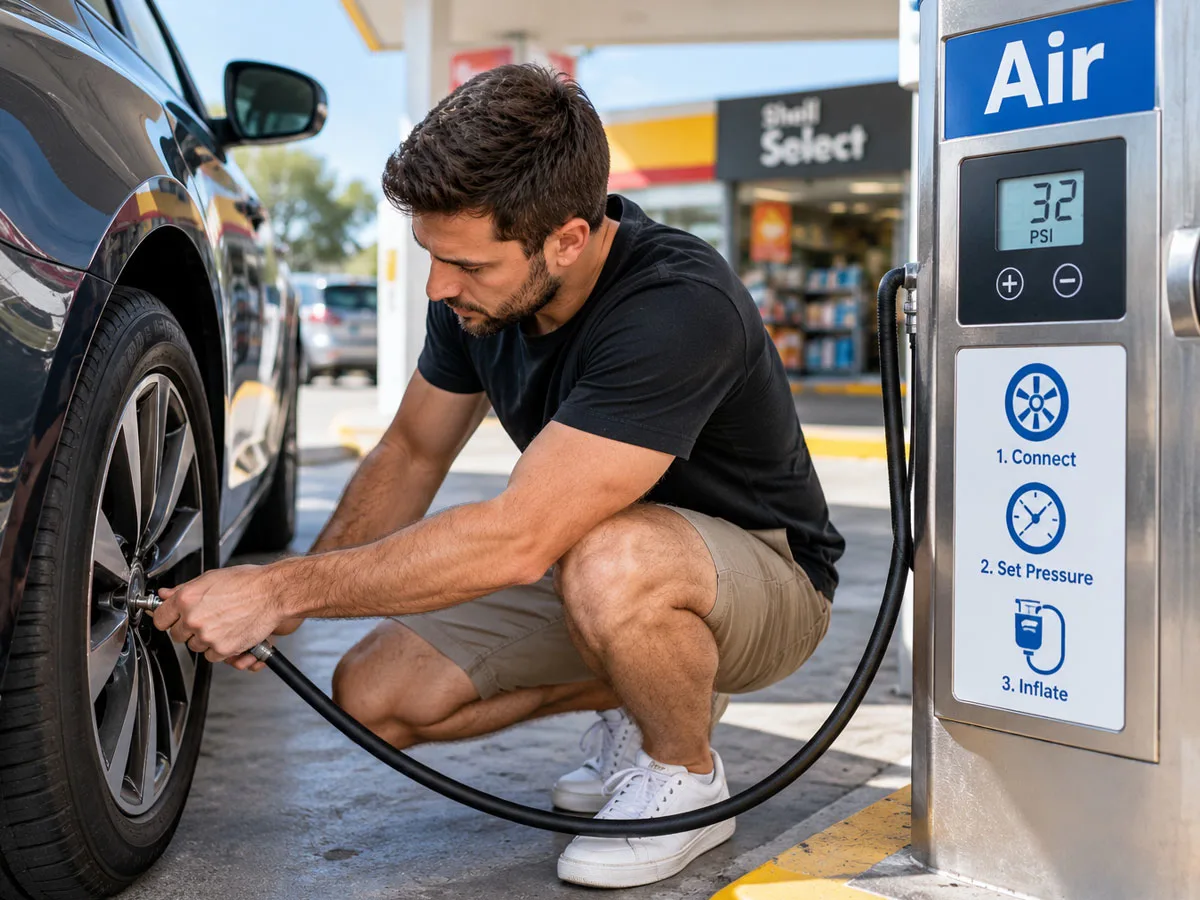
Most Australian petrol stations have air compressors that allow motorists to check and adjust tyre pressure. The process is straightforward once you know the correct setting.
Step 1: Check the Recommended PSI
Before using the compressor, locate the recommended pressure on your vehicle's placard or in the owner's manual. Check whether the front and rear tyres require different pressures. If the car is carrying a heavy load, use the manufacturer's relevant loading recommendation.
Step 2: Check the Tyres When Cold
Tyre pressure should ideally be checked when the tyres are cold. Driving generates heat, which increases the pressure of the air inside the tyre. A pressure reading taken after a long journey may therefore be higher than the cold reading. For a reliable measurement, check the tyres before driving or after they have cooled.
A petrol station close to home may be more convenient for this purpose than one reached after a long drive.
Step 3: Remove the Valve Cap
Unscrew the small cap from the tyre valve. Keep it somewhere safe while checking the pressure.
Step 4: Attach the Air Hose
Connect the compressor fitting firmly to the tyre valve. A properly seated connection should allow the machine to measure the pressure. If air continues escaping around the fitting, reposition it.
Step 5: Adjust the Pressure
For an automatic compressor, enter the recommended pressure and follow the machine's instructions. The compressor should add or release air as required. If you're using a manual compressor, monitor the reading with a suitable gauge. Avoid exceeding the pressure recommended for your vehicle.
Step 6: Check All Four Tyres
Repeat the process for each tyre. Remember that the front and rear settings may differ. Check the spare tyre where applicable. Temporary spare tyres can require substantially higher inflation pressures than standard road tyres, so always follow their specific instructions.
Step 7: Replace the Valve Caps
Replace each valve cap securely. The caps help protect the valves from dirt and moisture.
What If One Tyre Is Much Lower Than the Others?
A tyre that is significantly lower than the others may have a slow leak. Possible causes include a nail, screw, damaged valve or a problem where the tyre seals against the wheel. Inflating the tyre may temporarily restore its pressure, but it does not resolve the underlying cause.
If the pressure continues dropping, arrange a professional inspection.
Should You Check Tyre Pressure When Hot or Cold?
Cold is the preferred condition for routine tyre pressure checks. As a tyre rolls along the road, it flexes and generates heat. The air inside the tyre warms, causing its pressure to increase. This is normal. However, it means that a pressure reading taken after driving cannot always be compared directly with the manufacturer's cold-pressure recommendation.
Michelin advises checking tyre pressure when the vehicle has been stationary long enough for the tyres to cool, or after only a very short journey at low speed.
What Happens If You Check Warm Tyres?
A warm tyre may show a higher reading than it would when cold. For example, a tyre that is correctly inflated when cold may display a higher pressure after motorway driving. This does not automatically mean it is overinflated. Do not release air from a warm tyre simply to reduce it to the recommended cold-pressure figure.
Doing so may leave the tyre underinflated when it cools. Michelin provides specific guidance for situations where checking warm tyres cannot be avoided, including a temporary allowance above the cold recommendation and a subsequent cold recheck.
Follow the tyre and vehicle manufacturer's instructions rather than applying an arbitrary adjustment.
When Is the Best Time to Check Tyre Pressure?
Checking before your first drive of the day is often the most convenient option. A portable pressure gauge can make this easier. If you use a petrol station compressor, try to visit one close to home before the tyres have warmed significantly.
How Often Should You Check Car Tyre Pressure?
Bridgestone Australia and the RAA recommend checking tyre pressure at least once a month. You should also check before long journeys. Tyres can gradually lose air over time, even when there is no obvious puncture. Changes in temperature can also affect the reading.
Additional checks are sensible:
- Before travelling long distances.
- Before carrying additional passengers or luggage.
- Before towing, where applicable.
- After hitting a significant pothole.
- When a tyre looks unusually low.
- If a tyre pressure warning appears.
- When the vehicle begins handling differently.
Can You Tell If a Tyre Is Underinflated Just by Looking?
Not reliably. Modern radial tyres can lose a substantial amount of pressure without appearing obviously flat. The RAA specifically warns against relying solely on visual inspection. A tyre pressure gauge provides a much more useful measurement.
This is particularly important for vehicles with low-profile tyres, where pressure loss may be difficult to judge visually.
What Happens When Tyre Pressure Is Too Low or Too High?
Incorrect tyre pressure changes how the tyre behaves on the road. It can affect the contact area, tyre flexing, heat generation and tread wear.
What Happens When Tyre Pressure Is Too Low?
An underinflated tyre flexes more than intended. This additional movement can generate excess heat within the tyre. It can also increase rolling resistance, which may increase fuel consumption. Potential consequences include:
- Increased tyre wear.
- Greater heat build-up.
- Reduced steering precision.
- Less predictable handling.
- Increased rolling resistance.
- Higher fuel consumption.
- Greater risk of tyre damage.
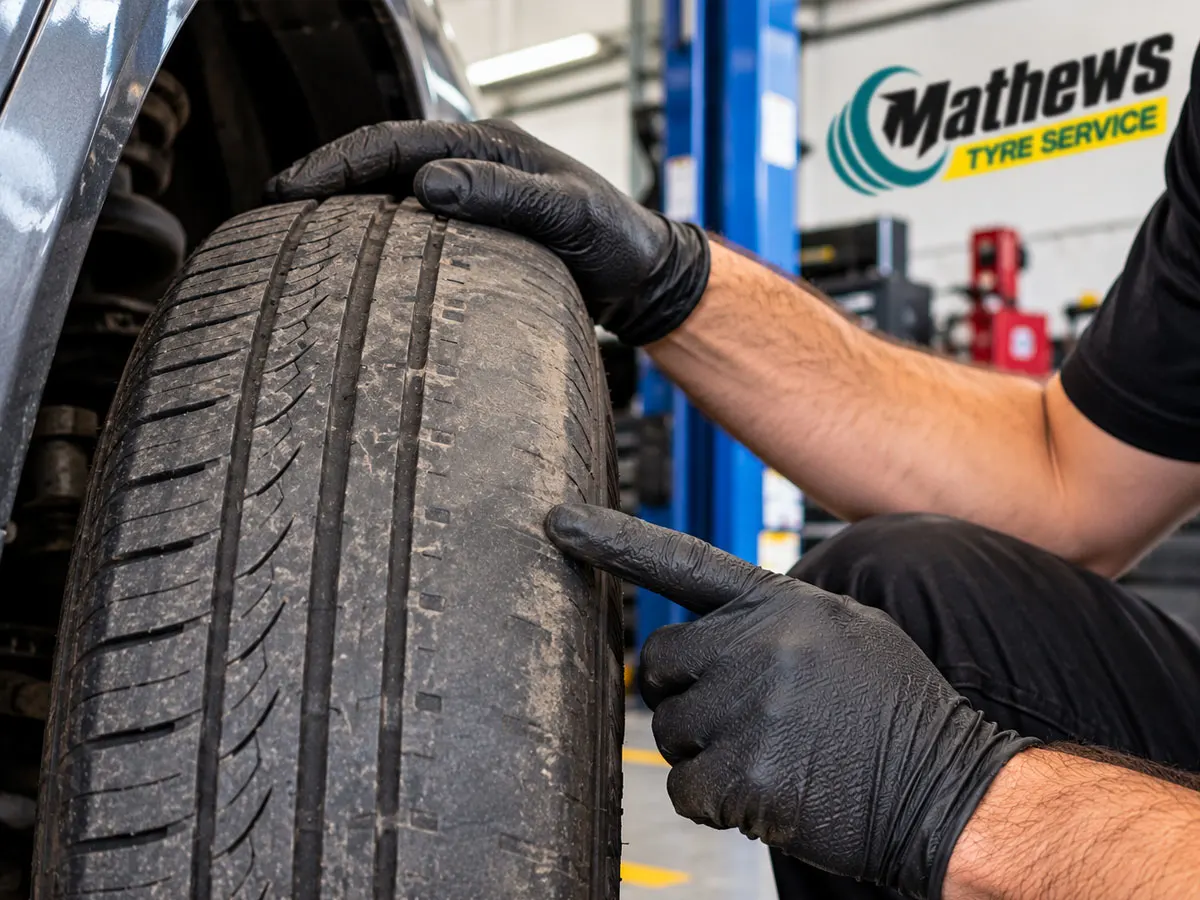
Underinflation can contribute to accelerated wear along both shoulders of the tread. However, not every shoulder-wear pattern is caused by low pressure. Wheel alignment, driving conditions and suspension faults may also contribute. Severe underinflation is particularly concerning because it can cause internal tyre damage.
A tyre that has been driven while substantially underinflated may require replacement even if its tread appears usable.
What Happens When Tyre Pressure Is Too High?
Overinflation can also affect tyre performance. Potential consequences include:
- A harsher ride.
- Reduced comfort over uneven roads.
- Changes in grip and handling.
- Increased susceptibility to certain impact-related damage.
- Concentrated tread wear in some circumstances.
Excessive pressure can change the way the tyre contacts the road. However, tread wear patterns vary between tyre designs, so a professional inspection is useful when abnormal wear develops.
Can Incorrect Tyre Pressure Cause Uneven Wear?
Yes. Incorrect inflation can contribute to premature or uneven tyre wear. However, it is not the only possible cause. For example, excessive wear along one shoulder may indicate a wheel alignment problem. Irregular wear can also result from worn suspension components.
If your vehicle pulls to one side, the steering wheel is off-centre or the tyres are wearing unevenly, an alignment inspection may be appropriate. Mathews Tyres provides wheel alignment and balancing services at its Campsie workshop.
Why Does My Tyre Keep Losing Air?
If one tyre repeatedly loses pressure, there may be a leak that needs attention. A tyre should not require frequent substantial top-ups under normal conditions. Several problems can cause repeated pressure loss.
1. A Nail or Screw in the Tread
Nails and screws can become embedded in the tread and create slow punctures. Sometimes the object remains lodged in the tyre, allowing air to escape gradually rather than immediately. Do not assume a small puncture is harmless simply because the tyre stays inflated for several days.
2. A Damaged Tyre Valve
The tyre valve allows air to enter the tyre while maintaining pressure. A damaged valve core or deteriorated valve assembly can allow air to escape. Valve problems may be difficult to identify without testing.
3. A Leak Around the Wheel Rim
The tyre must form an airtight seal against the wheel. Damage, corrosion or contamination around the sealing area can contribute to air loss. The wheel itself may also be damaged.
4. Tyre Sidewall Damage
Kerb strikes and potholes can damage a tyre's sidewall. Some damage is immediately visible. Other damage may require closer inspection. A bulge or significant sidewall injury can indicate structural damage and should be treated seriously.
5. A Previous Puncture Repair
A tyre may lose air if a previous repair is unsuitable or has failed. Professional inspection is necessary to determine whether the tyre can be safely repaired again.
6. Temperature Changes
Tyre pressure changes with temperature. A colder morning may produce a lower reading than a warmer afternoon. However, a significant or repeated pressure loss affecting only one tyre should not automatically be attributed to the weather.
7. Damage From Driving While Underinflated
A tyre that has been driven while severely underinflated may suffer internal damage. This can occur even when the external tread does not appear badly worn. Reinflating the tyre does not reverse internal structural damage. A professional inspection is necessary to determine whether continued use is safe.
Can a Slow Puncture Be Repaired?
Sometimes. A slow puncture does not automatically mean you need a new tyre. Bridgestone Australia explains that repairability depends on the location and extent of the injury, remaining tread depth and the tyre's overall condition. For standard passenger tyres, repairs are generally limited to qualifying injuries within the central tread area.
Damage to the shoulder or sidewall is generally not suitable for standard puncture repair. The tyre must also be inspected for internal damage.
Why Internal Inspection Matters
A tyre can look relatively normal externally while having damage to its internal structure. This is particularly important if it has been driven while flat or severely underinflated. A proper permanent repair must address both the injury channel and the inner liner.
An external string plug alone should not be treated as equivalent to a professional permanent repair.
When Does a Puncture Require Replacement?
Replacement may be necessary when:
- The injury is in the sidewall or shoulder.
- The puncture exceeds the applicable repair limits.
- The tyre has significant internal damage.
- The tyre has been driven while flat and its structure is compromised.
- The tread is excessively worn.
- There are dangerous cracks, bulges or exposed reinforcing materials.
If a tyre is visibly flat or severely underinflated, avoid driving on it. Arrange safe assistance or recovery rather than risking additional damage. Drivers from nearby suburbs can access tyre and puncture repair services near Canterbury at the Mathews Tyres workshop in Campsie.
What Does the Tyre Pressure Warning Light Mean?
Many modern vehicles have a tyre pressure monitoring system, commonly called TPMS. This system alerts the driver when it detects a possible tyre pressure problem. There are two main approaches.
Direct Tyre Pressure Monitoring
A direct TPMS uses sensors associated with the wheels to measure tyre pressure. Depending on the vehicle, the system may display individual tyre pressures.
Indirect Tyre Pressure Monitoring
An indirect TPMS generally uses information from the vehicle's wheel-speed sensors to detect changes consistent with tyre pressure loss. These systems do not necessarily measure the air pressure directly.
What Should You Do If the Warning Light Appears?
If the warning appears while driving:
- Reduce speed as appropriate and find somewhere safe to stop.
- Inspect the tyres for obvious damage or deflation.
- Check the pressures with a suitable gauge.
- Adjust the pressures according to the vehicle manufacturer's instructions if safe.
- Follow the correct TPMS reset or recalibration procedure where required.
- Arrange an inspection if the warning persists or returns.
If a tyre is visibly flat or badly damaged, do not continue driving. A tyre pressure warning may also indicate a system fault, particularly if the warning flashes or behaves differently from the normal low-pressure alert. Consult the vehicle handbook for the meaning of the warning.
Even vehicles equipped with TPMS benefit from regular manual pressure checks.
Does Low Tyre Pressure Increase Fuel Consumption?
Yes. Underinflated tyres generally have greater rolling resistance. Rolling resistance is the energy required to keep the tyres moving along the road. When rolling resistance increases, the vehicle may require more energy to maintain speed. This can contribute to increased fuel consumption.
The size of the effect depends on the vehicle, tyre design, driving conditions and severity of underinflation. Maintaining the manufacturer's recommended pressure helps support efficient operation. However, deliberately overinflating tyres to reduce fuel consumption is not advisable.
The correct pressure is intended to balance vehicle handling, safety, tyre performance and efficiency.
Does Tyre Pressure Change With the Weather?
Yes. Tyre pressure changes as the temperature of the air inside the tyre changes. As the air warms, pressure rises. As it cools, pressure falls. This is why your tyre pressure may be lower on a cold winter morning than on a warm afternoon. Sydney's seasonal temperature changes can affect tyre pressure readings.
However, this does not mean you should automatically use an arbitrary summer or winter PSI setting. Instead, check the tyres when cold and adjust them according to the manufacturer's recommendations.
Should You Add More Air Before a Long Trip?
Not automatically. Some manufacturers specify higher pressures for heavier loads. If you're carrying additional passengers, luggage or towing a trailer, check the relevant loading recommendations. Follow those settings rather than simply adding several PSI to every tyre.
Before a longer journey, it is also sensible to inspect:
- Tread depth.
- Visible cuts or damage.
- Sidewall condition.
- Uneven wear.
- Embedded objects.
- Spare tyre condition.
What Is the Difference Between Tyre Pressure, Wheel Alignment and Wheel Balancing?
These three aspects of tyre maintenance are related, but they address different issues.
Tyre Pressure
Tyre pressure refers to the amount of air inside the tyre. Correct inflation helps the tyre support the vehicle's load and perform as intended.
Wheel Alignment
Wheel alignment concerns the angles at which the wheels are positioned relative to the vehicle. Incorrect alignment can contribute to uneven tyre wear and steering problems. If your vehicle pulls to one side or the steering wheel sits off-centre, an alignment inspection may be appropriate.
Wheel Balancing
Wheel balancing addresses uneven mass distribution within the wheel and tyre assembly. An imbalance may cause vibration through the steering wheel or vehicle at certain speeds.
Why the Difference Matters
Inflating your tyres will not correct a wheel alignment problem. Likewise, wheel balancing will not repair a puncture or leaking valve. A professional inspection helps identify which issue is responsible for the symptoms. For drivers near Belfield, Mathews Tyres provides tyre fitting, wheel alignment and mechanical services near Belfield.
Tyre Pressure Checks and Puncture Repairs in Campsie
If your tyres keep losing pressure, show unusual wear or develop visible damage, having them inspected can help identify the cause before the problem becomes more serious.
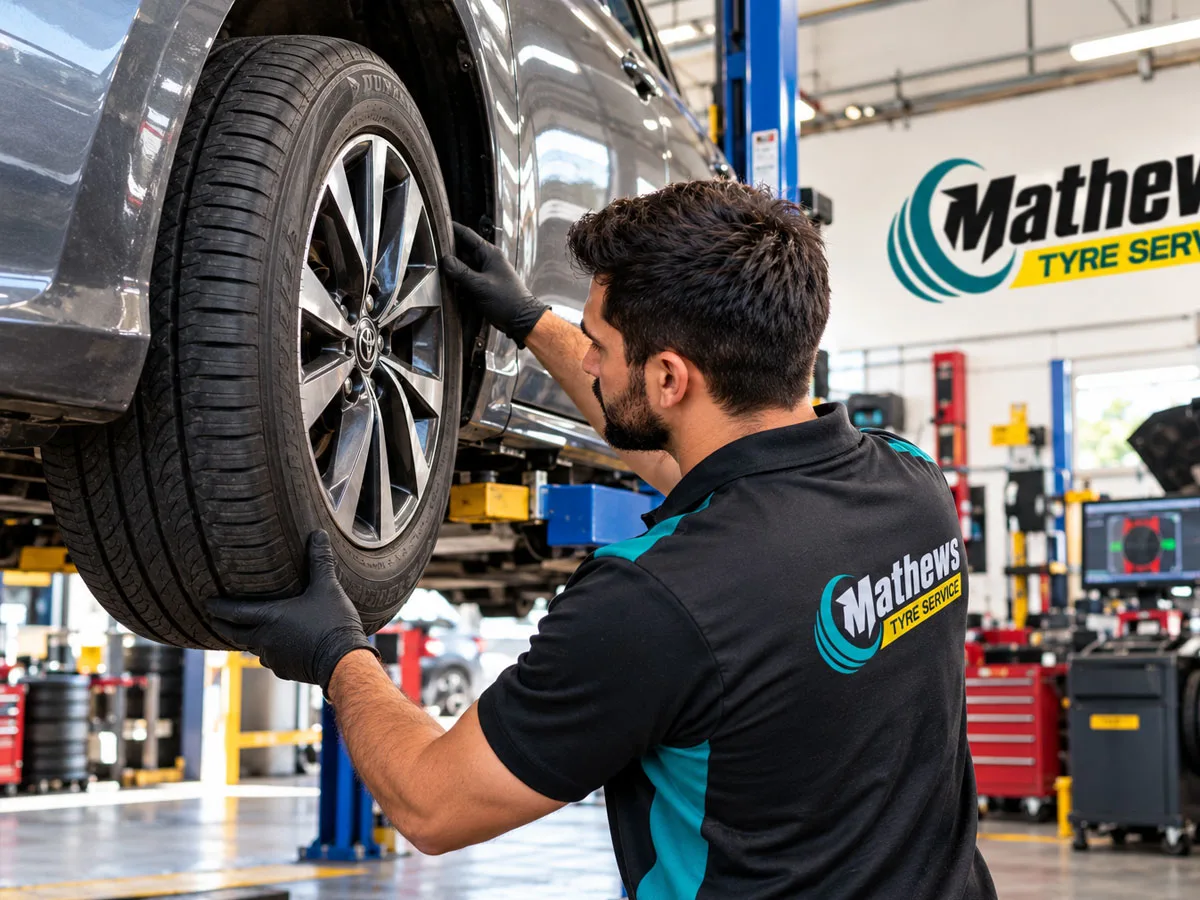
Mathews Tyres & Mechanical is located at 43 Ninth Ave, Campsie NSW 2194. The workshop provides tyre replacement, fitting, puncture repairs, wheel balancing, wheel alignment and general mechanical services. A tyre inspection can help determine whether a pressure problem is related to a puncture, valve issue, wheel damage or another cause.
Where a tyre can be safely repaired, replacement may not be necessary. If the tyre is damaged beyond safe repair, the workshop can discuss suitable replacement options for your vehicle. Mathews Tyres assists motorists from Campsie and surrounding suburbs, including Canterbury, Belmore, Lakemba, Belfield, Earlwood and Croydon Park.
Motorists looking for tyre fitting and repairs near Croydon Park can visit the Campsie workshop.
Frequently Asked Questions About Car Tyre Pressure
1. What PSI should my car tyres be in Australia?
The correct PSI depends on your vehicle manufacturer's specifications. Many passenger cars use pressures around 30–36 PSI, but this range does not apply to every vehicle. Check the tyre information placard or owner's manual for the recommended cold pressures.
2. Is 32 PSI a good tyre pressure?
32 PSI is suitable for some vehicles but not all. It should only be used if it matches the manufacturer's recommendation for your vehicle, tyre size and operating conditions.
3. Is 40 PSI too high for car tyres?
It depends on the vehicle. Some tyres and vehicles operate at 40 PSI or higher under specified conditions, while others require substantially less pressure. Follow the manufacturer's recommendation rather than assuming a higher pressure is better.
4. Should tyre pressure be checked hot or cold?
Cold is preferred. Driving warms the tyres and increases the pressure reading. Check before driving or after the tyres have cooled sufficiently. Do not release air from a warm tyre simply to match the cold-pressure recommendation.
5. How often should I check my car tyre pressure?
Check at least once a month and before long journeys. Additional checks are sensible if a tyre looks low, the vehicle begins handling differently or a tyre pressure warning appears.
6. Why does my tyre keep losing air?
Possible causes include a slow puncture, leaking valve, damaged wheel, poor bead seal or tyre damage. Temperature changes can also affect readings. Repeated or significant pressure loss should be professionally inspected.
7. Can I drive with a tyre pressure warning light on?
You should assess the warning promptly. Stop somewhere safe, inspect the tyres and check their pressures. If a tyre is flat, severely underinflated or visibly damaged, do not continue driving. Arrange suitable assistance.
8. Does low tyre pressure increase fuel consumption?
Yes. Underinflation can increase rolling resistance, which may increase fuel consumption. Maintaining the manufacturer's recommended pressure helps support efficient vehicle operation.
9. Should all four tyres have the same PSI?
Not necessarily. Some vehicles require different pressures for the front and rear tyres. Manufacturers may also specify different pressures for heavier loads. Always check the vehicle placard.
10. Where can I get a tyre pressure problem checked near Campsie?
Mathews Tyres & Mechanical provides tyre inspections, puncture repairs, tyre replacement, wheel balancing and wheel alignment at 43 Ninth Ave, Campsie NSW 2194. Call (02) 9789 5777 to discuss your vehicle.
Need Your Tyres Checked in Campsie?
Maintaining the correct tyre pressure helps protect your tyres and supports safer vehicle operation. If a tyre repeatedly loses air, develops uneven wear or shows signs of damage, it is worth having the problem inspected rather than repeatedly topping up the pressure.
Mathews Tyres & Mechanical provides tyre inspections, puncture repairs, replacement, fitting, balancing and wheel alignment services for motorists throughout Campsie and surrounding suburbs. Visit the workshop at 43 Ninth Ave, Campsie NSW 2194.
Call (02) 9789 5777, or contact Mathews Tyres to discuss your tyre requirements.